
St Martin'sCE Primary School
The Writing Process at St Martin’s
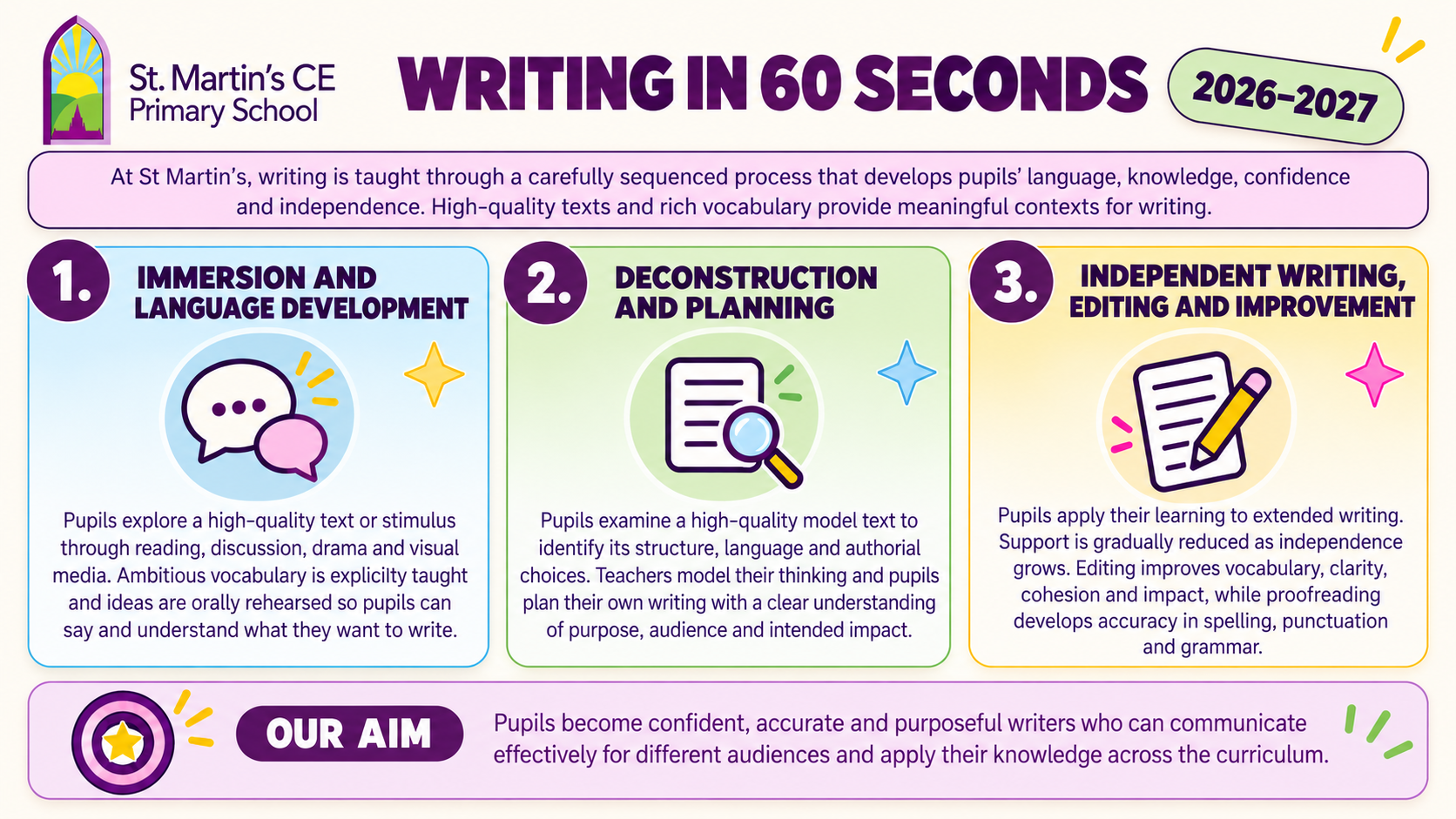
Phase One: Immersion and Language Development
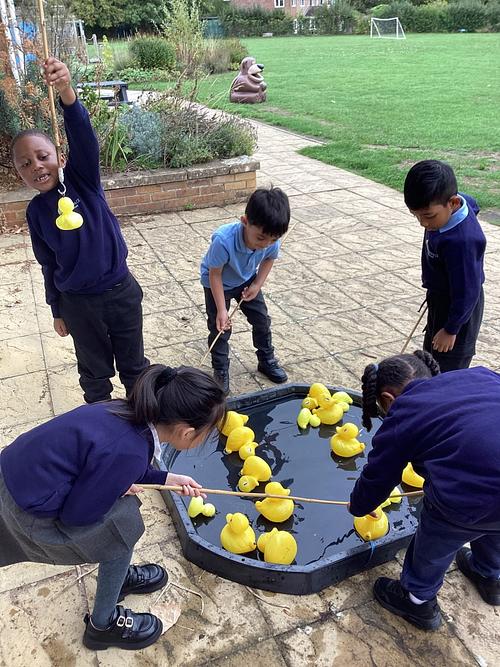
Writing begins with meaningful engagement in a high-quality text or stimulus. Pupils explore the characters, context, themes and language through discussion, visual media, drama and activities such as hot seating, role on the wall and conscience alley.
Ambitious vocabulary is explicitly taught, discussed and revisited. Pupils rehearse ideas orally, develop complete sentences and experiment with new language before beginning to write. This is particularly important for pupils learning English as an additional language, as it ensures they can say and understand what they want to communicate before writing it.
Phase Two: Deconstruction and Planning
Pupils explore a high-quality model text from the same genre, often written by the teacher to meet the needs of the class. Together, they identify how the text is organised and examine the vocabulary, grammatical structures and authorial choices used to achieve its purpose.
Teachers make the writing process visible through modelling and ‘think aloud’ strategies, explaining the decisions a writer makes according to purpose, audience and intended impact.
Pupils then use the vocabulary, knowledge and structures developed during the sequence to plan their own writing. Planning provides a clear structure while still allowing pupils to make individual and creative choices.
Phase Three: Independent Writing, Editing and Improvement
Pupils apply their learning to an extended piece of writing, supported by carefully scaffolded success criteria, teacher modelling and opportunities for collaborative improvement. Support is gradually reduced as pupils become increasingly confident and independent.
Editing is embedded throughout the writing process. Pupils learn to evaluate and refine their work by making purposeful changes to vocabulary, grammar, organisation, clarity, cohesion and impact. They are also taught to proofread carefully for accuracy in spelling, punctuation and grammar.
As pupils progress through the school, they take increasing ownership of the entire process—planning, drafting, evaluating, editing and publishing writing that is accurate, coherent and appropriate for its intended audience and purpose.